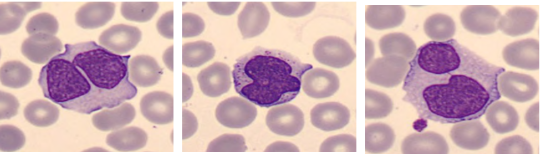
Persistent polyclonal B-cell lymphocytosis (PPBL) is a rare hematological disorder first described in 1982. It occurs predominantly, but not exclusively, in young to middle-aged (40–50 years) smoking women.It is characterized by persistent absolute and moderate lymphocytosis of more than 4 × 10^9/L with circulating hallmark binucleated lymphocytes and elevated polyclonal serum IgM.
Clinicopathologic Features
› Sustained lymphocytosis of more than 4 x 10^9/L
› 10% of lymphocytes binucleated. The remaining lymphocytes are large with an ample amount of cytoplasm, rounded or irregular nuclei with slight indentation, and mature chromatin
› Polyclonal increase of serum IgM
› Polyclonal population of CD5-negative B Lymphocytes, normal kappa/lambda ratio
› Extra isochromosome for the long arm of chromosome 3 +i(3)(q10) is present in up to 70% of cases and G1 premature chromatin condensation can be seen in up to 10% of patient.
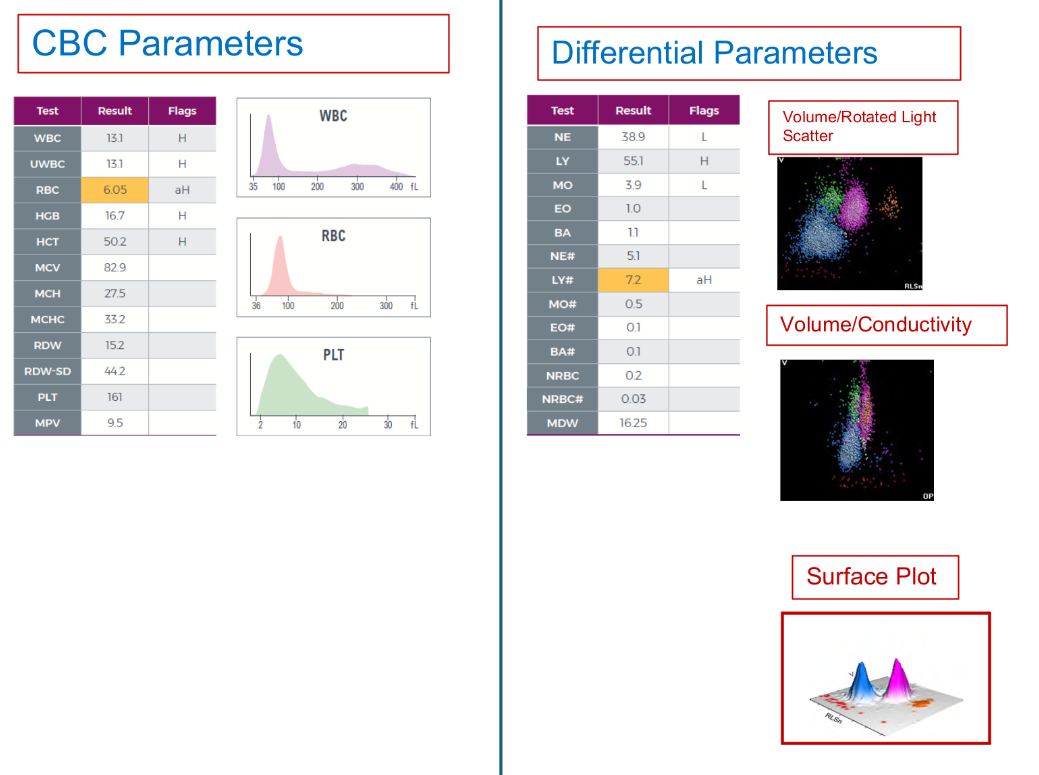
CBC parameters indicate leukocytosis and elevated RBC and Hgb.Yellow indicates an action limit is exceeded.
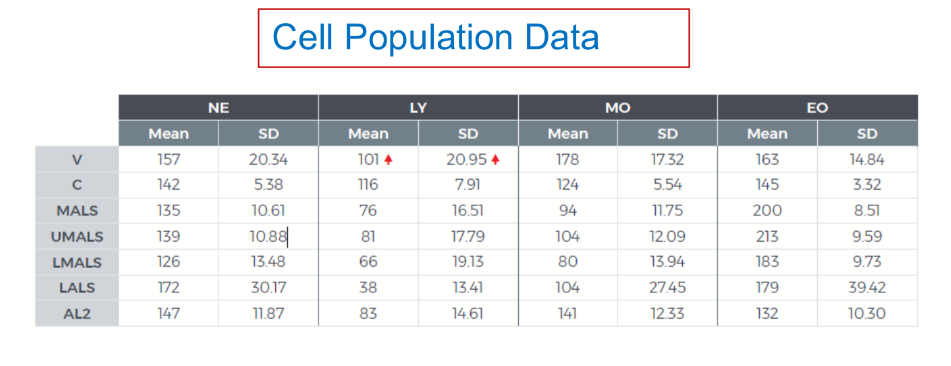
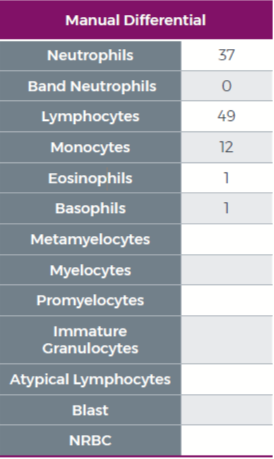
The results of the WBC automated differential show absolute lymphocytosis
5PD1 plot (Scatter vs.Volume) and 5PD2 plot (Opacity vs. Volume) show enlarged LY population with some big lymphocytes